The EUDR Cut-Off Date Explained: Why 31 December 2020 Matters More Than Any Deadline
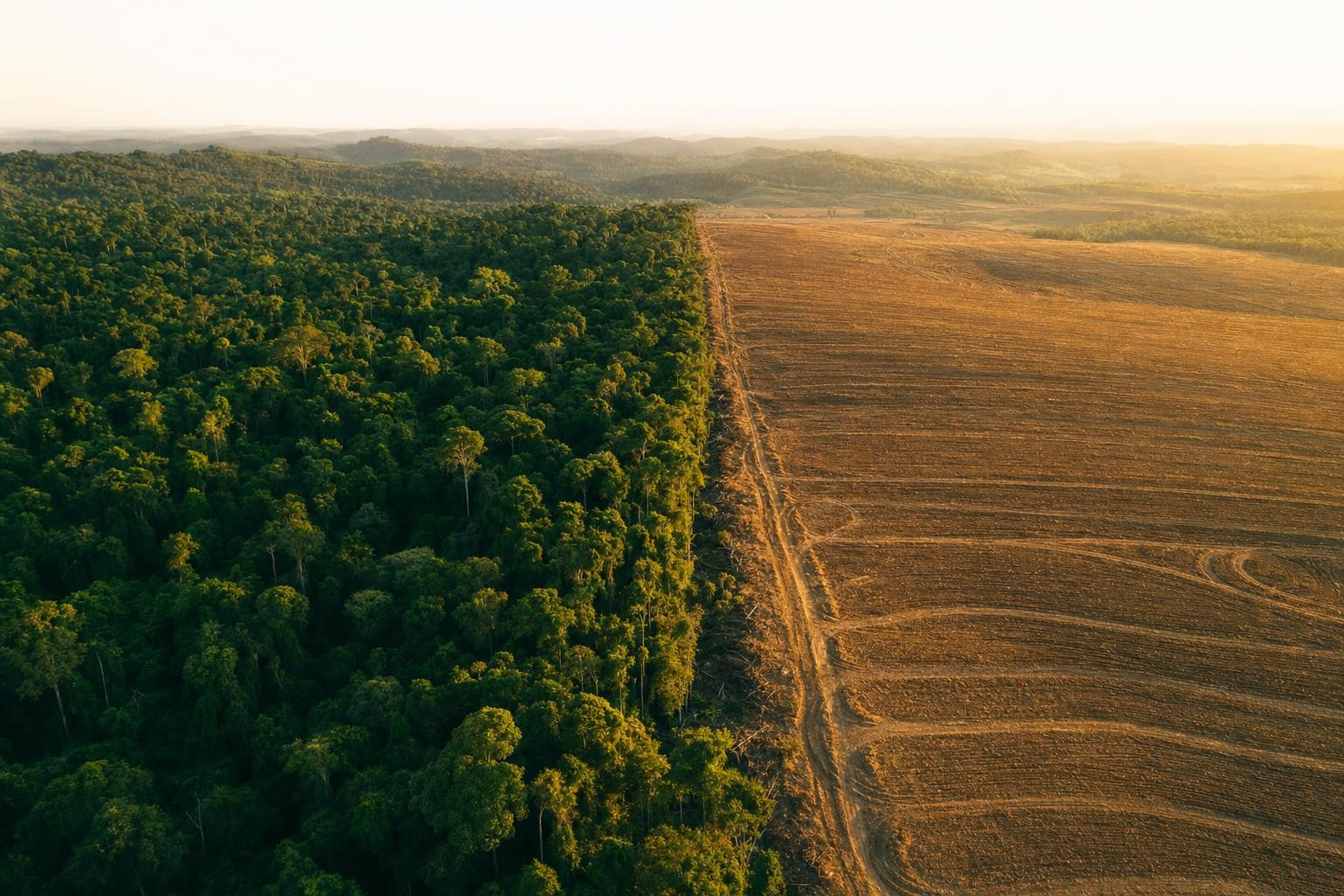
Everyone in the supply chain is watching the calendar for 30 December 2026 - the date large operators must start filing due diligence statements. That deadline matters. But there is a different date buried in the regulation that determines whether your underlying land and commodities can ever be compliant at all: 31 December 2020. It is fixed, it is non-negotiable, and - critically - it was not touched by either of the two application-date delays.
Understanding the difference between these two dates is the foundation of EUDR compliance. Get it wrong and you may spend months building a due diligence system around land that is structurally non-compliant before you even start.
Two Dates, Two Completely Different Questions
The EUDR asks two separate questions about every consignment:
- Has the operator submitted a due diligence statement? - This is governed by the application date: 30 December 2026 for large operators, 30 June 2027 for micro and small enterprises.
- Is the land itself deforestation-free? - This is governed by the cut-off date: 31 December 2020, full stop.
The one-year delay introduced by Amending Regulation (EU) 2024/3234 - and the further delay confirmed in late 2025 - pushed the application date forward. It did not move the cut-off date by a single day. A plot deforested in January 2021 was non-compliant the moment the regulation was adopted, and it remains non-compliant today, regardless of when enforcement formally begins.
The cut-off date (31 December 2020) and the application deadline (30 December 2026) are legally independent. Delays to the deadline do not change what land qualifies as deforestation-free. If a plot was converted from forest to agricultural use after 31 December 2020, no amount of waiting makes it compliant.
What "Deforestation-Free" Actually Means
The term sounds intuitive, but the regulation's definition in Article 2(13) is precise and worth reading carefully.
A commodity or product is deforestation-free if it was produced on land that has not been subject to deforestation after 31 December 2020. For timber and timber products, there is an additional requirement: the land must also not have been subject to forest degradation after that date (more on that below).
Two things are worth unpacking here.
It covers the whole supply chain, not just the final product
The deforestation-free test applies to the commodity itself, to any ingredient or input derived from it, and - in the case of cattle - to any animal fed on it. A chocolate bar is non-compliant if the cocoa in it came from deforested land, even if the chocolate manufacturer had no idea. The obligation to trace back to the plot of land sits with the operator placing the product on the EU market.
"Whether human-induced or not" is in the text
The regulation defines deforestation as "the conversion of forest to agricultural use, whether human-induced or not" (Article 2(3)). This means a natural event - a wildfire, a flood, a storm - does not automatically exempt the land. If the affected area is subsequently converted to agricultural use after 31 December 2020, it counts as deforestation under the EUDR. The cause of the initial clearing is irrelevant; what matters is the land-use outcome.
What Counts as Deforestation - and What Doesn't
This is where many companies make costly assumptions. Not every conversion of forest land triggers the EUDR's deforestation test. The regulation is specifically concerned with conversion to agricultural use.
Conversions for the following purposes are not deforestation within the meaning of the EUDR:
- Roads and transport infrastructure
- Settlements and urban development
- Industrial plants
- Photovoltaic (solar) installations
- Wind farms
- Fire protection measures
- Biodiversity restoration projects
Only the conversion of forest to agricultural use - farmland, pasture, plantations of agricultural crops - meets the legal definition. A forest cleared for a solar farm after 2020 does not make the surrounding soy farm non-compliant. A forest cleared to grow cocoa after 2020 does.
The Timber-Only Rule: Forest Degradation
For most commodities - cocoa, coffee, soy, palm oil, rubber, cattle - the deforestation-free test is the only land-based test. For wood and timber products, there is a second, stricter requirement: the land must also be free from forest degradation after 31 December 2020.
Forest degradation is defined in Article 2(7) as structural changes to forest cover taking the form of:
- The conversion of primary forests or naturally regenerating forests into plantation forests or into other wooded land
- The conversion of primary forests into planted forests
In plain English: replacing a native, naturally growing forest with a managed monoculture plantation - even if trees remain on the land - counts as degradation for timber purposes. The forest is still there, but its ecological character has been fundamentally altered.
A few important limits on this definition:
- It applies only to timber. Forest degradation is not part of the deforestation-free definition for cocoa, soy, coffee, palm oil, rubber, or cattle. Those commodities only need to pass the deforestation test.
- Natural damage alone does not trigger it. Storm damage, pest infestations, or fires that are not related to harvesting activities are not covered. The European Commission's FAQ guidance (FAQ 4.5, 4.7) confirms that damage caused by climate events or disease outbreaks, where the harvest itself does not trigger a structural transformation, does not render timber non-compliant.
- The risk grows over time. Because the cut-off date is 2020, plantations established after that date are currently too young to harvest at commercial scale. But as time passes, timber companies will need to verify that the plantation forests they are sourcing from did not replace primary or naturally regenerating forests after December 2020.
Timber buyers: when assessing a new supplier, ask specifically whether the forest of origin is classified as primary, naturally regenerating, or plantation. If it is primary or naturally regenerating, you need evidence that no structural conversion occurred after 31 December 2020 — not just that no trees were cleared for agriculture.
The Cut-Off Date Is Not the Same as the Legality Requirement
This is one of the most common misconceptions in EUDR compliance discussions, and it has real consequences.
The EUDR imposes two independent requirements on every commodity:
| Requirement | What it asks | Governed by |
|---|---|---|
| Deforestation-free | Was the land free from deforestation/degradation after 31 Dec 2020? | The cut-off date |
| Legally produced | Did production comply with the laws of the country of production? | National law of the producing country |
These requirements are separate and cumulative. A commodity must satisfy both to enter the EU market.
The practical implication is significant: local legality does not determine EUDR compliance on the deforestation question. A plot that was legally cleared under national law in 2021 - with all the correct permits - is still non-compliant under the EUDR if it was forest before the conversion. Conversely, a plot that was cleared without proper permits before 2020 may pass the deforestation-free test but fail the legality test.
Neither requirement substitutes for the other.
How the Cut-Off Date Shapes Your Evidence Requirements
Because the reference point is a fixed historical date, compliance verification is fundamentally a retrospective exercise. You are not just proving what the land looks like today - you are proving what it looked like on 31 December 2020 and what happened to it since.
This shapes the evidence you need to gather:
Geolocation data is the starting point. Operators must trace commodities back to the specific plot of land where they were produced, providing coordinates precise enough to identify the plot on a map.
Satellite and remote-sensing imagery anchored to the 2020 baseline is the primary verification tool. Compliance teams cross-reference plot coordinates against historical forest cover data - including the EU's Copernicus satellite database - to confirm that no forest loss occurred after the cut-off date. The EUDR guidance explicitly requires operators to use remote sensing methods and GIS-based forest cover maps to verify their land data.
Historical records - cadastral data, aerial photographs, land-use registries - provide additional evidence of land status before and after the cut-off date. Historical aerial photographs can be particularly useful for demonstrating land use prior to 2020.
The key point: the evidence must be capable of demonstrating the land's status at a specific point in the past, not just its current condition. A plot that is clearly agricultural today may have been forest in 2020, and the burden is on the operator to show otherwise.
Common Misconceptions, Corrected
"The delays mean the cut-off date moved too." No. The application date moved. The cut-off date is written into the substantive definition of "deforestation-free" in Article 2(13) and was not amended by either delay regulation.
"If the deforestation was legal in the producing country, it's fine." No. Legality is a separate EUDR requirement. The deforestation-free test is independent of whether the conversion was permitted under national law.
"Any forest clearing after 2020 is deforestation." No. Only conversion to agricultural use counts. Clearing for roads, solar farms, wind turbines, settlements, or biodiversity restoration does not meet the EUDR's definition of deforestation.
"Forest degradation applies to all commodities." No. Forest degradation is exclusively part of the deforestation-free definition for timber and timber products. It does not apply to cocoa, coffee, soy, palm oil, rubber, or cattle.
"A 2019 deforestation event makes the land non-compliant." No. The cut-off date is 31 December 2020. Land that was converted from forest to agricultural use before that date - even the day before - can still be deforestation-free under the EUDR, provided the conversion is documented.
What to Do Next
The cut-off date is not a future event to prepare for - it already happened. The question for every operator and trader is whether the land in their supply chain was forest on 31 December 2020, and whether it has remained free from conversion to agricultural use since then.
That means the work is historical and spatial: gathering plot-level geolocation data, running it against 2020 baseline satellite imagery, and building a documented evidence trail that can withstand scrutiny from a competent authority.
If you are not sure where your supply chain stands on this, the right starting point is understanding your obligations and then mapping your sourcing geographies against known deforestation risk.
Was the cut-off date changed when the EUDR was delayed?
No. The one-year delays (first to 30 December 2025, then to 30 December 2026) moved the application date — the date operators must start filing due diligence statements. The cut-off date of 31 December 2020 is embedded in the substantive definition of 'deforestation-free' in Article 2(13) and was not amended by either delay regulation.
Can a plot deforested in 2019 be EUDR-compliant?
Yes. The cut-off date is 31 December 2020. Land converted from forest to agricultural use before that date can still be deforestation-free under the EUDR, provided the operator can document the land's status. The regulation does not reach back before the cut-off date.
Does forest degradation apply to cocoa or coffee?
No. Forest degradation is exclusively part of the deforestation-free definition for timber and timber products (Article 2(13)(b)). For cocoa, coffee, soy, palm oil, rubber, and cattle, only the deforestation test applies.
If a conversion was legal under national law, does it pass the EUDR?
Not automatically. The EUDR imposes two independent requirements: the commodity must be deforestation-free (cut-off date test) and legally produced (national law test). A legally permitted conversion after 31 December 2020 still fails the deforestation-free test.
Does clearing a forest for a solar farm count as EUDR deforestation?
No. The EUDR defines deforestation as conversion of forest to agricultural use. Conversions for photovoltaic installations, wind farms, roads, settlements, industrial plants, fire protection, or biodiversity restoration are explicitly outside the definition.
What evidence do I need to prove a plot was deforestation-free?
You need plot-level geolocation data (coordinates precise enough to identify the specific plot) cross-referenced against historical satellite or remote-sensing imagery anchored to the 31 December 2020 baseline. Cadastral records, aerial photographs, and land-use registries can supplement satellite data. The EUDR guidance requires operators to use remote sensing methods and GIS-based forest cover maps.
Related reading
EUDR Compliance Costs After Simplification: What the 75% Figure Actually Means for Your Budget
The Commission estimates a 75% cut in EUDR compliance costs EU-wide. Here's why that aggregate figure doesn't map onto your invoice - and how to build a budget you can actually defend.
EUDR Risk Assessment and Mitigation: How to Show 'No Risk or Only Negligible Risk' (Articles 10 and 11)
Between collecting supplier data and filing a due diligence statement sits the step most teams under-document: risk assessment and mitigation. Here is how the two stages work and how to evidence them.
Indonesia, Palm Oil and the EUDR: Why Processed Imports Are the Real Exposure
Indonesia supplies a modest share of the EU's crude palm oil but more than half of its processed palm oil. That split, plus a forecast production dip in 2027, shapes where EUDR exposure sits.