Malaysia's Palm Oil Sector and EUDR: What MSPO Recognition Does (and Doesn't) Buy You
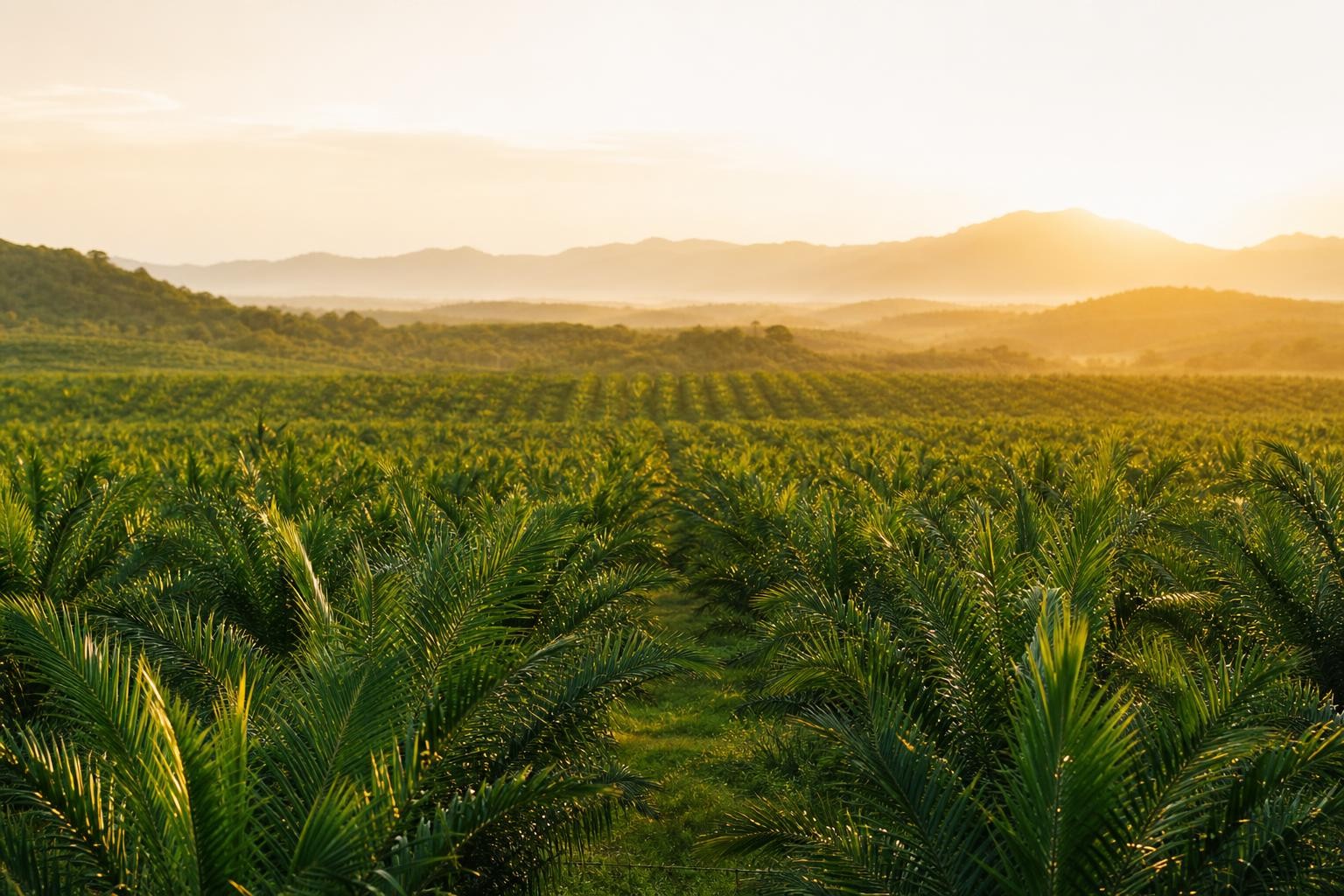
If you buy Malaysian palm oil, you've likely heard some version of "our estates are MSPO-certified, so we're covered for EUDR." That sentence is doing more work than the facts support. This post is about what Malaysian Sustainable Palm Oil (MSPO) certification and its EU recognition actually change for your due diligence - and what they don't.
We've covered palm oil compliance generally in our palm oil rules guide and certification schemes generally in our FSC/RSPO/PEFC/Rainforest Alliance piece. Neither of those goes deep on Malaysia and MSPO specifically, and the two facts below - how far MSPO has spread, and how the EU has actually characterized it - deserve their own treatment.
What actually happened
In September 2025, the EU officially recognized MSPO as, in its own words, "a credible standard that can help facilitate compliance with the bloc's deforestation rules." That recognition, combined with the deadline extension to 30 December 2026, gave Malaysia's palm oil sector both validation and runway. The numbers show the sector used it: roughly 90% of Malaysian palm oil estates now hold MSPO certification, and certification among independent smallholders - historically the hardest group to bring into any traceability scheme - has reached roughly 85%.
Malaysia's Plantation and Commodities Minister, Noraini Ahmad, has publicly framed the extended timeline as "an opportunity to strengthen industry readiness" rather than a reason to ease off. In practice, that has meant expanding the MSPO standard itself and building a centralized, national palm-oil traceability system rather than treating certification as a finished product. Industry coverage as recent as 17 September 2026 describes continued, active compliance pressure on the sector as the December deadline approaches - this is not a story that concluded with the 2025 recognition; it's ongoing.
What "recognized" does not mean
Here is the distinction that matters most, and it comes directly from legal analysis of the EU-Malaysia arrangement: MSPO offers "a credible sustainability scheme with a high-standard digital traceability system," but the EU's recognition of it explicitly does not create automatic compliance or a shortcut. The often-quoted framing is blunt: EUDR is "a due-diligence law - not a certification law."
Concretely, MSPO certification cannot substitute for any of the following, which remain the EU operator's own responsibility regardless of a supplier's certificate:
- Plot-level geolocation data - polygons for farms above 4 hectares, points for smaller ones - for the specific consignment in question.
- Verification of legal compliance with Malaysian law, spanning land tenure, environmental rules, labor law, tax, and indigenous-rights statutes.
- The operator's own risk assessment and mitigation, applied to that specific supply chain, not the country or scheme in general.
- Filing the Due Diligence Statement itself. A certificate is supporting evidence you can cite inside a DDS; it is not a document that replaces one.
A certification scheme, however credible, is evidence you can weigh in a risk assessment. It is not a substitute for doing the risk assessment.
The detail that trips up a lot of buyers: risk classification is separate from certification
Malaysia's EUDR country risk classification remains "standard-risk," not low-risk - meaning shipments face a minimum 3% consignment inspection rate, compared with 1% for countries classified low-risk. This does not move because a supplier is MSPO-certified, or because certification rates hit 90%. Country risk benchmarking is a separate EU process (see our country risk tiers explainer) that would require its own formal update to change - high certification penetration inside a country is not, by itself, evidence the Commission has said it will act on.
What to actually ask a Malaysian supplier
"Are you MSPO-certified?" is a reasonable opening question. It is not a closing one. On top of the certificate, ask for:
- Geolocation coordinates for the specific plots supplying this shipment - not a scheme-wide attestation.
- Evidence of legality under the specific Malaysian statutes covering that plot (land title, environmental permits, labor compliance).
- How MSPO's digital traceability system output maps to your own DDS fields - the systems can feed each other, but the mapping isn't automatic, and someone needs to own it.
- Confirmation of which risk tier applies and what mitigation measures (if any) are layered on top of certification for that specific origin.
MSPO is a genuine asset here - a scheme with 90% estate coverage and a government actively investing in centralized traceability is a materially better starting point than sourcing from an uncertified, unmapped supply base. But "materially better starting point" and "compliant" are different claims, and the gap between them is exactly where an EU operator's own due diligence obligation lives.
Sources: Reccessary - "Malaysia uses EUDR delay to strengthen palm oil traceability, MSPO standards"; Mondaq legal analysis - "EUDR: MSPO Helps, But Is Not Carte Blanche".
Related reading

EUDR Compliance Costs After Simplification: What the 75% Figure Actually Means for Your Budget
The Commission estimates a 75% cut in EUDR compliance costs EU-wide. Here's why that aggregate figure doesn't map onto your invoice - and how to build a budget you can actually defend.
EUDR Risk Assessment and Mitigation: How to Show 'No Risk or Only Negligible Risk' (Articles 10 and 11)
Between collecting supplier data and filing a due diligence statement sits the step most teams under-document: risk assessment and mitigation. Here is how the two stages work and how to evidence them.
Indonesia, Palm Oil and the EUDR: Why Processed Imports Are the Real Exposure
Indonesia supplies a modest share of the EU's crude palm oil but more than half of its processed palm oil. That split, plus a forecast production dip in 2027, shapes where EUDR exposure sits.